ONLINE STORE NOW LIVE
VIEW CLUB SHOP




August 1991. Mary Robinson is in her first year as President of Ireland. Nirvana release their second studio album “Nevermind” featuring the hit single “Smells Like Teen Spirit”. Tim Berners-Lee introduces the World Wide Web (that’s the internet, kids) to the general public. Terminator 2 is the highest-grossing movie on the planet, the Super Nintendo is launched, and back home in the West of Ireland, history is about to be made as Galway United prepare for their third and what is now their last appearance in European Club competition.
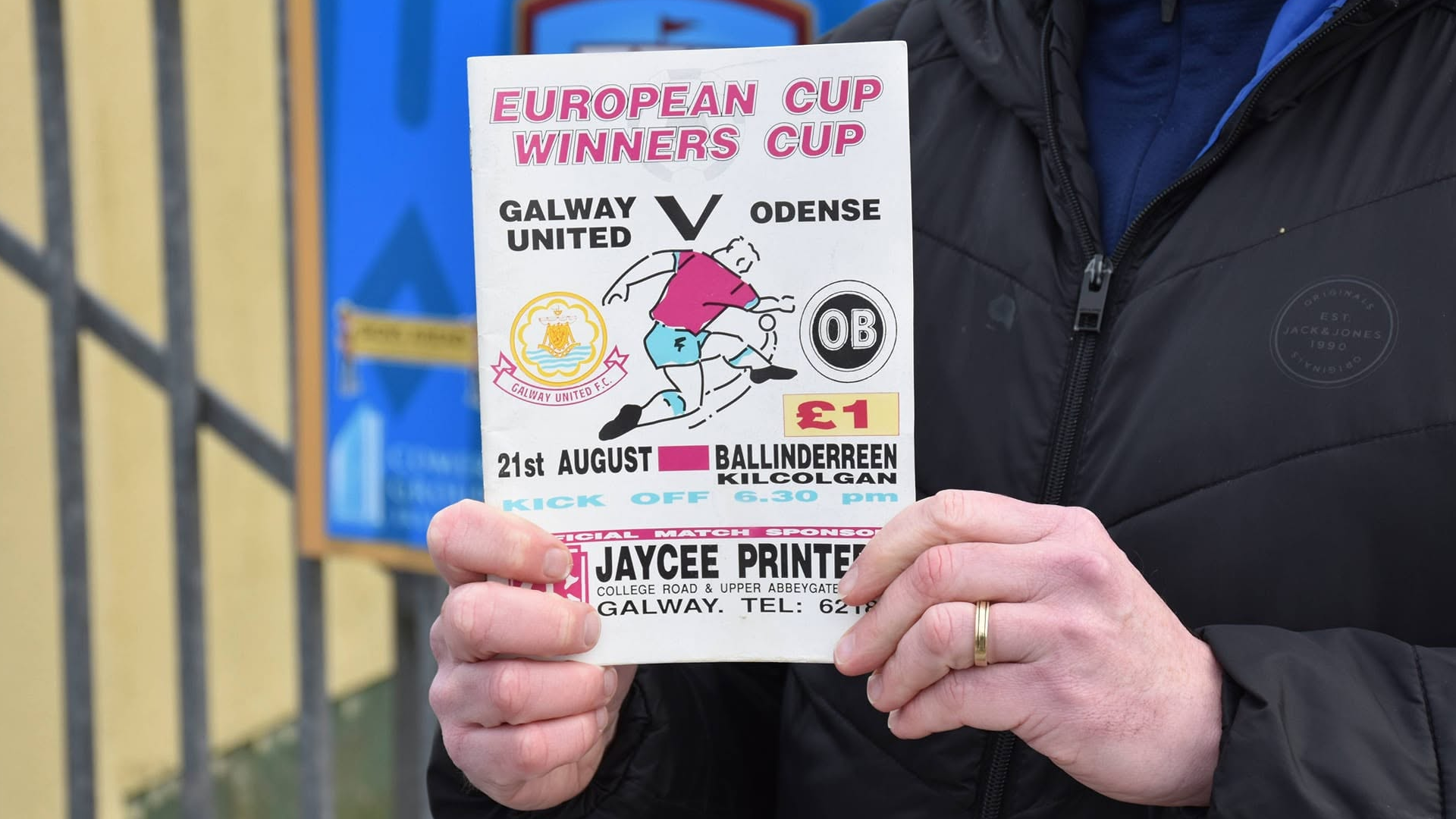
For those who lived it, the Tribesmen’s UEFA Cup Winners’ Cup qualifiers against Odense Boldklub of Denmark were a remarkable occasion, not because of the end result which very much went against Galway’s favour, but more so the hype and furore that went with the home fixture in particular.
Five years had passed since United were last involved in European competition (we’ll come back to that in Maroon View later in the season), and such was the size and scale of the fixture that it was historically held at Ballindereen GAA grounds nestled between Kilcolgan and Kinvara on what is now known as the Wild Atlantic Way.

An agreement was reached between the clubs which would see the local GAA club retain the gate receipts, and as former chairman Michael Kelly recalled years later when the GAA board were negotiating with then Galway United chairman Nial O’Reilly, the decision went to a vote as to whether or not they would host this unique sporting occasion.
Galway United had reached the 1991-92 European Cup Winners’ Cup qualifiers after winning the FAI Cup in dramatic fashion earlier that year. Johnny Glynn’s late goal against Shamrock Rovers in the final at Lansdowne Road secured an historic 1-0 victory and booked the club’s place in Europe for the third occasion in six seasons.
“We put it to the meeting anyway. I told them what they were offering us as well. Our stand would hold 600, and they would give us the takings of the stand, And we had the shops and all that. The vote wasn't unanimous, but it wasn't close either. The committee voted by 10 votes to 2 to allow the match to proceed..the majority won and we went ahead and told them we'd give them the ground.”
Expectations were high among supporters, despite the knowledge that European competition would present a considerable test for a side operating on a fraction of the budget available to many continental clubs. Their reward was a first-round tie against Odense BK, one of Denmark’s leading teams.
The first leg was played in Ballinderreen, where approximately 6,000 spectators attended the match, creating a memorable atmosphere as the local community welcomed European football to the area. Galway entered the game without key players Tommy Keane and Johnny Glynn, both of whom had departed during the summer, and lined up with a squad that included the likes of Stephen Lally, Derek Rodgers, John Cleary, Noel Mernagh and Gerry Mullan, who had earned their European opportunity through their FAI Cup triumph.
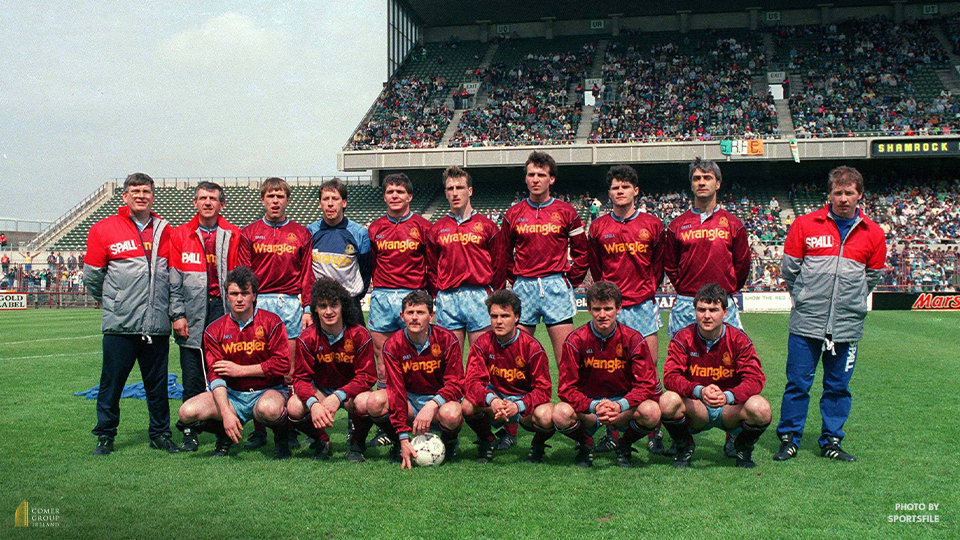
Odense, meanwhile, arrived with a team possessing greater quality and experience at continental level - most notably Thomas Helveg in defence, who went on to amass over 100 international caps for Denmark. The away side controlled possession and capitalised on their chances, eventually securing a 3-0 victory. Despite the scoreline, the occasion itself was a source of pride for Galway United and their supporters, many of whom were witnessing European football in the west of Ireland for the first time.
United’s history. Travelling abroad for European competition was still a relatively rare experience for Irish clubs at the time, and the challenge facing Galway was immense. Odense entered the match with a commanding three-goal advantage and were determined to finish the job professionally. The Danes fielded a strong side and once again proved too powerful for their opponents. United battled throughout the contest but were unable to find the breakthrough they sought. The Danish club recorded a 4-0 victory on the night, completing a comprehensive 7-0 aggregate success. While the result was disappointing, Galway’s players gained invaluable experience from competing on the European stage and gave the club and county a unique and exciting football experience like never before.
Here’s hoping our next European adventure sits just beyond the horizon here on the Wild Atlantic Way.

You can purchase Maroon View for more exclusive content at home games or online HERE.






























.png)



.png)

.png)
.png)

